
Iran’s Oil Supply Threat Extends Beyond Strait of Hormuz
Iran's Oil Supply Threat Extends Beyond Strait of Hormuz Iran s Oil Supply Threat Extends - Disruptions in Gulf oil and gas shipments have resurfaced as
Iran’s Oil Supply Threat Extends Beyond Strait of Hormuz
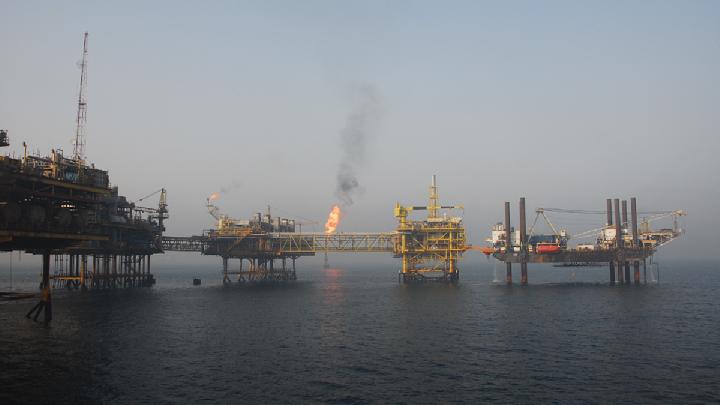
Iran s Oil Supply Threat Extends – Disruptions in Gulf oil and gas shipments have resurfaced as tensions between the U.S. and Iran escalate. Control of the strategic Strait of Hormuz remains a critical battleground for both nations, with Iran demonstrating its ability to disrupt maritime traffic through sustained attacks.
“Months of aerial assaults have not eroded Iran’s dominance over the Strait of Hormuz,” remarked Guntram Wolff, a Bruegel think tank expert and economics professor at Brussels’ Free University.
This week, Iranian strikes on tankers and missile launches targeting military sites in Bahrain, Kuwait, and Jordan pushed traffic in the strait to near-stagnation. In response, the U.S. intensified air operations, reimposed a naval embargo on Iranian ports, and canceled a sanctions exemption that facilitated oil sales.
Pre-War Oil Flow Statistics
Before hostilities began on February 28, the Strait of Hormuz served as a vital artery for global energy trade. The International Energy Agency noted that it was a primary route for 20% of world LNG, while approximately 20% of global crude oil passed through the waterway to the Arabian Sea and beyond. The U.S. Energy Information Administration estimated daily exports at around 20 million barrels.
Following the conflict’s outbreak, oil flows dropped to 14.6 million barrels per day in the first quarter, marking a sharp decline. Although a June 17 ceasefire offered temporary relief, it has since dissolved, with U.S. forces targeting hundreds of Iranian military sites in recent weeks.
Analysts Predict Escalating Risks
Experts caution that continued assaults on Iran could trigger retaliation against Gulf energy infrastructure, including refineries, ports, and pipelines. This would amplify regional costs and potentially lead to oil supply shortages.
“The gains from the June ceasefire are now largely reversed,” stated MARISKS, a Greek maritime risk firm. “The risk of further escalation remains extremely high.”
Strategic Shift in Oil Transportation
Early in the conflict, Iran imposed a $2 million toll on ships using the strait, prompting a shift to northern routes through its waters. Meanwhile, the U.S. Navy has been securing southern pathways along Oman’s coastline.
Currently, Iran, Iraq, Kuwait, Qatar, and Bahrain depend heavily on the strait for most of their oil exports. While shipping is the most cost-effective method, it has become a contested route. Producers are exploring alternatives, with some nations already utilizing pipelines to bypass the strait.
Challenges of Expanding New Routes
Saudi Arabia’s East-West Pipeline, linking Abqaiq to the Red Sea port of Yanbu, is one such alternative. However, tankers exiting Yanbu still face the Bab el-Mandeb Strait, a vulnerable chokepoint where Iran-backed Houthis have launched attacks. This could create a secondary conflict front, forcing ships to divert around Africa’s southern tip via the Suez Canal.
The UAE is aggressively pursuing alternatives, including expanding infrastructure and constructing a new port on its eastern coast. Other pipelines in Iraq, Jordan, and Turkey are either operational or in development, but their limited capacities—around 8.8 million barrels per day—cannot fully offset Hormuz’s role in global energy supply.