
Meteor Over Java Triggers Boom, BRIN Explains the Phenomenon
Meteor Over Java Triggers Boom, BRIN Explains the Phenomenon Meteor Over Java Triggers Boom BRIN - On the evening of July 11, 2026, a brilliant meteor
Meteor Over Java Triggers Boom, BRIN Explains the Phenomenon
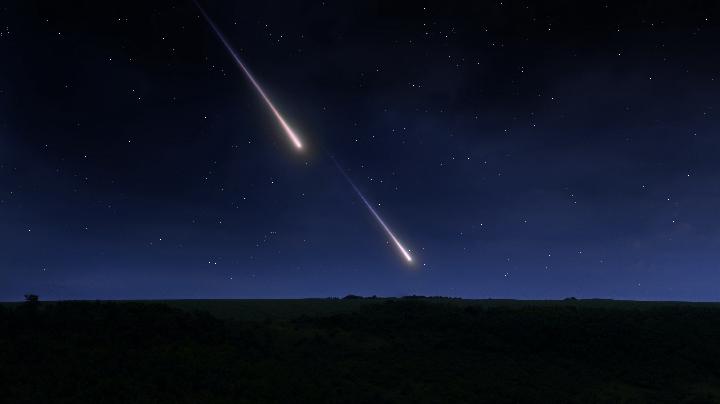
Meteor Over Java Triggers Boom BRIN – On the evening of July 11, 2026, a brilliant meteor streaking across the skies of Java Island sparked an unusual auditory reaction among witnesses, who reported a powerful boom following its passage. The event, which captured the attention of social media users and the general public, was swiftly analyzed by the Indonesian National Research and Innovation Agency (BRIN) to provide clarity on the scientific aspects of the phenomenon. While the visual spectacle of the meteor was widely documented, the accompanying sound added a layer of intrigue, prompting questions about its origin and nature. BRIN’s experts confirmed that the meteor’s trajectory and the resulting sonic boom were the result of natural atmospheric processes, not an explosive event.
Understanding the Meteor’s Atmospheric Journey
The meteor’s appearance was the result of a space rock entering Earth’s atmosphere at an altitude of approximately 120 kilometers, as explained by Thomas Djamaluddin, a BRIN researcher specializing in astronomy and astrophysics. During this descent, friction with the air generated intense heat, causing the meteoroid to ablate and emit light. This process, known as ionization, creates the glowing trail visible to the naked eye. Thomas emphasized that such events are not uncommon, but the specific conditions of the meteor’s entry—its speed, angle, and composition—determined the intensity of the light and sound it produced.
“The glowing effect occurs as the meteoroid’s surface heats up due to atmospheric friction, creating a luminous trail that we perceive as a meteor,” said Thomas, as reported in a written statement on July 12, 2026. He further noted that the event was likely caused by a meteoroid with a high velocity, which contributed to both the light and the subsequent sonic boom.”
While most meteors burn up completely before reaching the ground, larger ones can create a visible explosion or a lingering light. The meteor over Java triggered boom was notable for its audible impact, which Thomas attributed to the shockwave generated by the object moving faster than the speed of sound. This sound, though delayed, was a common occurrence during meteor events with sufficient energy and altitude.
Geographical and Temporal Observations
Witnesses across multiple regions of Java reported the meteor’s path, which moved southeastward and was first detected over the Java Sea before becoming visible in Bekasi at 21:22:35 WIB. At this point, the object remained high in the sky, appearing as a small white streak. As it descended into denser atmospheric layers, its brightness increased, with varying colors observed in different locations. In Majalengka, a blue hue was noted, while a vivid green glow was captured in Yogyakarta at 21:23:57 WIB.
“The color variations are due to the different mineral compositions of the meteoroid and the atmospheric conditions it encountered during entry,” explained Thomas. He highlighted that green light often indicates the presence of magnesium or nickel, which ignite at high temperatures. This meteor over Java triggers boom was a rare event, as the combination of speed, trajectory, and material composition led to the distinctive visual and auditory effects.”
BRIN’s analysis suggested the meteor continued its path toward the southeast, with its trajectory potentially ending in the Indian Ocean south of East Java or Bali. The timing of the event, occurring during a clear night, allowed for extensive documentation by residents, who shared videos and photographs on social media platforms. This widespread observation contributed to the public’s fascination and the agency’s ability to gather detailed data for further study.
The Role of Sonic Booms in Meteor Events
The booming sound reported in parts of West Java, particularly in Cirebon and Kuningan, was explained by Thomas as a result of the meteoroid’s supersonic movement through the lower atmosphere. As the object traveled faster than the speed of sound, it generated a shockwave that resonated on the ground after some delay. This phenomenon is similar to the sonic boom produced by aircraft breaking the sound barrier, but in the case of meteors, the sound is a byproduct of their high-velocity entry.
“The shockwave was only audible some time after the meteor passed because the sound waves took longer to travel through the denser atmospheric layers,” Thomas clarified. “This delay is a common feature in meteor events with significant energy, and it is not an indication of an explosion on the ground.”
Such sonic booms, though startling, are harmless and do not pose a threat to populated areas. Thomas stressed that the meteor over Java triggers boom was a natural occurrence, and the primary concern for the public is to distinguish it from potential hazards like falling debris. BRIN’s detailed analysis helped reassure communities that the event was a routine atmospheric phenomenon, not a cause for alarm.
Frequency and Significance of Meteor Events
Thomas Djamaluddin pointed out that the meteor over Java triggers boom is part of a broader pattern of celestial activity. He cited the Draconid Meteor Shower, which was observed in Cirebon on October 5, 2025, as an example of how meteors are a regular feature of Earth’s sky. According to BRIN, millions of space rocks enter the atmosphere daily, but most are too small to be seen. Larger meteors, like the one over Java, are rare but provide valuable data for scientists studying Earth’s interactions with space debris.
“Even though we are constantly bombarded by space rocks, the majority burn up in the atmosphere before reaching the surface,” said Thomas. “Events like the meteor over Java triggers boom are significant because they offer insights into the composition and behavior of meteoroids as they traverse our planet’s atmosphere.”
The incident also served as a reminder of the importance of scientific communication. Thomas urged the public to rely on verified sources, such as BRIN, to understand the phenomenon rather than speculate based on limited observations. With continued monitoring and analysis, such events can be better explained, helping to dispel myths and promote a deeper appreciation for celestial occurrences.