
Indonesia Denies State-Decreed LGBTQ Discrimination: What’s the Truth?
Indonesia Denies State-Decreed LGBTQ Discrimination: What's the Truth? Indonesia Denies State Decreed LGBTQ Discrimination - Indonesia has formally denied
Indonesia Denies State-Decreed LGBTQ Discrimination: What’s the Truth?
Indonesia Denies State Decreed LGBTQ Discrimination – Indonesia has formally denied allegations that its state decree promotes systemic discrimination against LGBTQ individuals, with President Prabowo Subianto’s administration emphasizing that the policy is designed to protect national values rather than marginalize communities. The regulation, signed on October 24, 2025, as Presidential Regulation 111/2025, categorizes the spread of LGBTQ culture as a “non-military threat.” This classification, however, has sparked debate over whether it institutionalizes bias against the community. While the government asserts that the law does not target LGBTQ individuals directly, critics argue that its framework could be interpreted as enabling societal prejudice and restricting cultural expression.
The Legal Justification for the State Decree
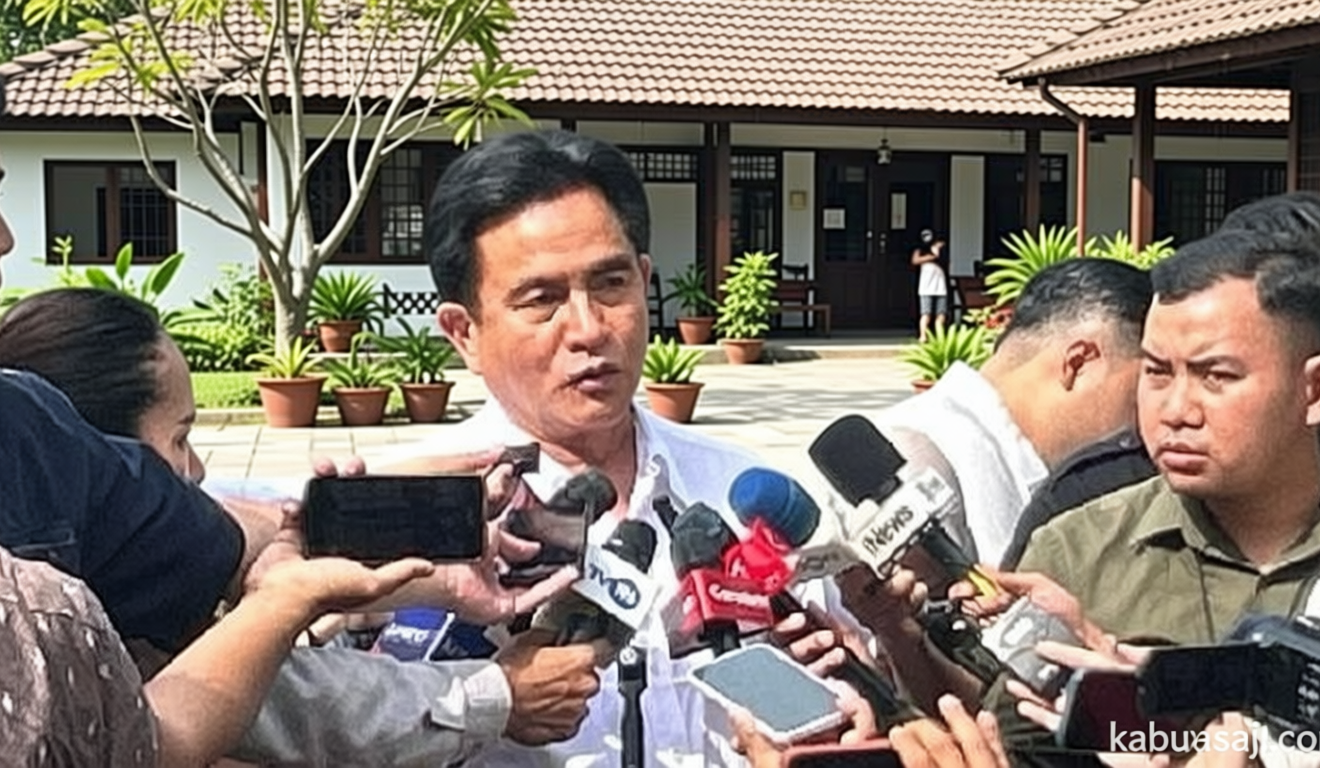
Yusril Ihza Mahendra, Coordinating Minister for Legal Affairs, Human Rights, Immigration, and Corrections, has been a vocal defender of the policy, stating that it is grounded in Indonesia’s constitutional principles and the Pancasila ideology. He clarified that the regulation aims to address perceived threats to traditional family values and social cohesion, which he believes are essential to national identity. “Indonesia Denies State Decreed LGBTQ Discrimination because the law focuses on cultural preservation, not individual rights,” Yusril explained in a public statement. This argument aligns with the government’s broader stance that LGBTQ culture, while not inherently harmful, could challenge the moral fabric of society if left unchecked.
The term “non-military threat” is central to the regulation’s rationale, as it frames LGBTQ cultural spread as a socio-political risk. According to Yusril, this classification includes actions that disrupt national resilience, such as campaigns promoting gender diversity or same-sex relationships. He emphasized that the measure is not aimed at erasing LGBTQ identities but at ensuring that their cultural influence does not overshadow foundational societal values. “The state’s role is to safeguard the collective interests of all citizens, including the younger generation,” Yusril stated, highlighting the regulation’s focus on protecting future societal norms.
Human Rights Concerns and International Reactions
Despite the government’s assurances, human rights advocates have raised alarms about the potential impact of the state decree on LGBTQ communities. Organizations such as Amnesty International Indonesia and the Indonesian LGBTQ Rights Coalition argue that the regulation indirectly supports discrimination by allowing public and institutional actors to justify prejudice against LGBTQ individuals. They point to the regulation’s vague language as a tool that could be weaponized to suppress advocacy and dissent.
Amnesty International’s executive director, Usman Hamid, warned that the policy risks institutionalizing systemic discrimination. “Labeling LGBTQ communities as a national threat enables the state to ignore their rights and dignity,” he said in a statement on July 8, 2026. This sentiment is echoed by legal experts who note that the regulation could be used to justify restrictions on free speech, assembly, and the right to self-identify. Critics also highlight that Indonesia is a signatory to the International Covenant on Civil and Political Rights (ICCPR), which guarantees protections against discrimination, making the decree a potential contradiction to its international commitments.
Moreover, the regulation’s implementation has led to concerns about its compatibility with Indonesia’s existing legal framework. While the government claims it operates within constitutional boundaries, opponents argue that it undermines progressive legislation, such as the 2023 Indonesian LGBTQ Rights Bill, which sought to expand protections for LGBTQ individuals. The tension between preserving traditional values and advancing inclusive rights has become a focal point of national discourse, with advocates pushing for a more balanced approach.
Impact on LGBTQ Communities and Public Perception
The state decree has been met with mixed reactions from the public and civil society. While some Indonesians support the policy as a safeguard against cultural erosion, others view it as a reinforcement of stigma and exclusion. LGBTQ activists have reported increased fear of backlash, with many citing the regulation as a catalyst for discriminatory practices in workplaces, schools, and religious institutions. “This policy creates a legal pretext for prejudice,” said Aminah, a transgender rights activist based in Jakarta. “It gives people permission to question the legitimacy of our existence.”
On the other hand, supporters of the decree argue that it reflects the values of a majority of Indonesians, particularly in rural and conservative regions. They contend that the regulation is a necessary measure to align national policies with the cultural ethos of the country. “Indonesia Denies State Decreed LGBTQ Discrimination because the law respects the diversity of opinions while protecting the core principles of Indonesian society,” stated a conservative community leader. This divide underscores the complex interplay between legal frameworks, cultural norms, and the rights of minority groups in Indonesia.
Additionally, the decree has implications for international relations, as it may affect Indonesia’s reputation as a leader in regional human rights initiatives. While the government has not explicitly targeted LGBTQ individuals for discrimination, the policy’s ambiguity has been used to justify stricter measures in some local jurisdictions. This has led to calls for clearer definitions and safeguards to prevent the regulation from being misinterpreted as a tool for systemic exclusion.
Comparing Past Policies and Current Legislation
Indonesia’s approach to LGBTQ rights has evolved over time, with the state decree representing a continuation of earlier efforts to regulate the community. In 2016, the government proposed a law criminalizing same-sex relationships, which was later modified to focus on “public morality.” The 2023 bill, which aimed to decriminalize LGBTQ relationships, faced significant opposition, leading to its搁置 (postponement). The 2025 regulation, therefore, can be seen as a compromise between conservative and progressive factions, blending the state’s desire to protect traditional values with its obligation to uphold human rights.
Yusril Ihza Mahendra has consistently framed the state decree as a neutral measure, one that does not explicitly outlaw LGBTQ identities but allows for their cultural influence to be scrutinized. “Indonesia Denies State Decreed LGBTQ Discrimination by ensuring that all citizens are treated equitably under the law,” he reiterated. However, critics argue that the regulation’s broad scope leaves room for interpretation, which could be exploited to marginalize LGBTQ individuals in both legal and social contexts. The debate highlights the ongoing struggle to balance cultural preservation with the recognition of individual rights in a diverse society.
As the policy moves forward, its long-term impact on LGBTQ communities will depend on how it is implemented and enforced. While the government maintains that it is not discriminatory, the regulation’s alignment with religious and traditional values has been used to justify stricter societal norms. This has led to calls for further dialogue and amendments to ensure that the decree does not inadvertently contribute to the exclusion of LGBTQ individuals. The conversation continues to shape Indonesia’s approach to LGBTQ rights, with the state decree serving as a key point of contention.
Read: What Minister Yusril Says About the Proposed LGBT-Related Bill
Click here to get the latest news updates from Tempo on Google News