
Why Is Argentina’s World Cup Win Over Egypt Causing Controversy?
ausing Controversy? Why Is Argentina s World Cup Win - In the 2026 FIFA World Cup, Argentina’s 3-2 victory against Egypt in the round of 16 has sparked
Why Is Argentina’s World Cup Win Over Egypt Causing Controversy?
Why Is Argentina s World Cup Win – In the 2026 FIFA World Cup, Argentina’s 3-2 victory against Egypt in the round of 16 has sparked widespread debate over the fairness of the match. The focus keyword, *Why Is Argentina’s World Cup Win*, has become central to the conversation, as critics argue that the game’s outcome was influenced by questionable decisions from officials and the Video Assistant Referee (VAR). Despite the final score, the controversy has overshadowed Argentina’s progression to the quarter-finals, raising questions about the integrity of the tournament’s decision-making processes.
Egypt’s Dramatic Collapse and Argentina’s Comeback
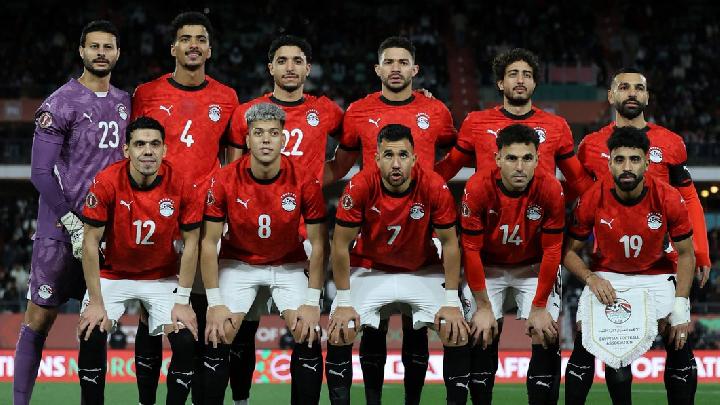
Argentina’s triumph over Egypt was a rollercoaster of emotions, with the South American giants initially trailing after a strong performance from the African team. Egypt’s opening goal, scored by Yasser Ibrahim, and Mostafa Zico’s second in the first half gave them a commanding 2-0 lead, fueled by their aggressive play and tactical discipline. However, Argentina’s resilience shone through in the latter stages, as Cristian Romero’s 79th-minute header and Lionel Messi’s equalizer in the 83rd minute set the stage for a dramatic finale. In stoppage time, Enzo Fernández’s goal sealed Argentina’s passage, but the path to victory was anything but straightforward.
The controversy surrounding the win stems from the disparity in the game’s flow and the perceived advantage granted to Argentina. Critics argue that the VAR system, which was deployed for critical decisions, may have overlooked key moments that tilted the balance. For instance, a contentious penalty decision in the first half, which Argentina missed, has been re-examined in light of the game’s eventual outcome. This has led to speculation about whether the officials’ interpretations were influenced by bias or external factors, further fueling the debate over *Why Is Argentina’s World Cup Win* seen as contentious.
Coaches and Players Voice Their Discontent
Following the match, Egyptian coach Hossam Hassan and players like Mostafa Zico voiced their frustration, accusing the referees of favoring Argentina. Hassan, in particular, highlighted the scheduling of the game as a contributing factor, stating that the midday start on July 7 left his team at a disadvantage.
“The referee is unfair, God is sufficient for me and the best disposer of affairs. He’s wasting the effort of an entire nation,”
Zico said, emphasizing the emotional toll of the decision. Hassan echoed similar sentiments, claiming that the timing of the match—just four days after both teams had played their previous games—was detrimental to Egypt’s performance.
Hassan’s post-match remarks also focused on the VAR’s role, suggesting that its intervention in key moments gave Argentina an unfair edge. “I do not want to try to put it nicely here with beautiful wording. We have been treated unfairly today. We have suffered injustice,” he said, as reported by The Guardian. These comments have intensified the discussion around *Why Is Argentina’s World Cup Win* and whether the technology is being used to its full potential or as a tool for bias.
Historical Context and Tournament Implications
Egypt’s journey to this point has been historic, as they became the first African team to reach the World Cup quarter-finals. Their earlier victory over Australia in a penalty shootout during the Round of 32 had already marked a significant milestone, but the loss to Argentina has reignited debates about their chances in the knockout stages. Supporters of the African side argue that the match’s outcome was not a reflection of their performance, but rather a result of biased officiating. This sentiment is amplified by the fact that Argentina’s squad, bolstered by European stars like Messi and Mbappé, faced a domestic league-based team in a high-stakes encounter.
Meanwhile, Argentina’s advancement to the quarter-finals against Switzerland has been celebrated as a testament to their skill and adaptability. However, the controversy over *Why Is Argentina’s World Cup Win* has cast a shadow over their progress. Fans and analysts are now questioning whether the game was decided by the players’ performance or by the officials’ decisions. This uncertainty has led to calls for a review of the match’s key moments, with some suggesting that the VAR’s decisions may have been pivotal in Argentina’s favor.
VAR’s Role and the Debate Over Fairness
The Video Assistant Referee system, introduced to enhance decision-making in football, has been both praised and criticized in this match. While VAR is meant to correct clear errors, some argue that its use in the Argentina-Egypt game was inconsistent. For example, a crucial handball incident in the 65th minute, which could have led to a penalty for Egypt, was not flagged by the VAR. This decision, combined with a missed penalty by Messi in the first half, has been cited as evidence of the system’s potential flaws. Critics question whether the VAR’s judgments were based on objective criteria or subjective interpretations, further fueling the argument over *Why Is Argentina’s World Cup Win*.
Additionally, the timing of the match has been scrutinized. With both teams having played their previous games just four days earlier, the physical toll on Egypt’s players is believed to have played a role in their inability to maintain their lead.
“Whoever schedules these matches is someone who has never played football. You never schedule a football match at 12 noon. At that time, people are strolling or having lunch, not playing football,”
Hassan remarked, pointing to the scheduling as a strategic oversight. This has led to a broader conversation about the importance of match timing in high-intensity tournaments like the World Cup.
Broader Implications for the World Cup
The controversy over *Why Is Argentina’s World Cup Win* has raised important questions about the fairness of the World Cup and its governing body, FIFA. With increasing reliance on technology like VAR, the line between objective refereeing and subjective bias is becoming more blurred. This match has highlighted the potential for technology to either enhance transparency or introduce new sources of contention. Fans and media alike are now calling for stricter oversight of VAR decisions, especially in high-stakes knockout games where a single call can alter the course of the tournament.
Moreover, the incident has sparked a global conversation about the challenges faced by underdog teams in the World Cup. Egypt’s efforts to overcome the odds, despite the controversies, have been celebrated as a symbol of perseverance. However, their defeat has also served as a reminder of the immense pressure placed on teams in the knockout stages, where every decision can be magnified. As the tournament progresses, the question of *Why Is Argentina’s World Cup Win* remains a focal point, influencing not only the narrative of this match but also the perception of fairness in the entire competition.