
Papua Conflict Falls Under VP Gibran’s Mandate, Says Politician
ate, Says Politician Papua Conflict Falls Under VP Gibran - Recent developments in Papua have reignited discussions about the political responsibility for
Papua Conflict Falls Under VP Gibran’s Mandate, Says Politician
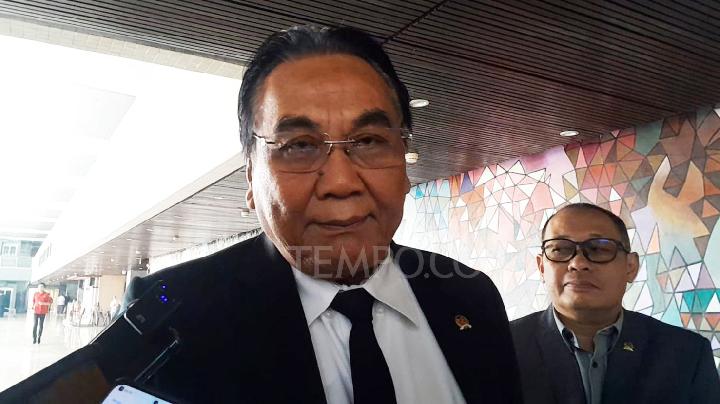
Papua Conflict Falls Under VP Gibran – Recent developments in Papua have reignited discussions about the political responsibility for resolving the region’s long-standing tensions. Senior Indonesian politician Bambang Wuryanto, a prominent member of the People’s Consultative Assembly (MPR), has asserted that the resolution of the Papua conflict now rests squarely on the shoulders of Vice President Gibran Rakabuming Raka. This statement, made at the MPR complex in Jakarta on July 7, highlights the growing belief that Gibran’s role under Indonesia’s Special Autonomy Law for Papua provides him with the legal authority to steer the region’s future.
The Legal Framework and Political Shift
Bambang’s remarks come as part of a broader debate over the division of responsibilities between the executive and legislative branches in addressing the Papua conflict. He emphasized that the Special Autonomy Law, enacted in 2001, grants the vice president a pivotal role in overseeing development and human rights initiatives in the region. “The law clearly regulates it, and it becomes the responsibility of the vice president. So if there are issues like this, they should be directed to the vice president,” Bambang said, underscoring the legal mandate that places Gibran in a central position to mediate the dispute.
Escalating Tensions and Call for Leadership
The politician’s comments followed a surge in violence in Papua, particularly after clashes between Indonesian military forces and the West Papua National Liberation Army–Free Papua Movement (TPNPB-OPM). These confrontations, which resulted in civilian casualties, have intensified demands for decisive leadership. Bambang argued that Gibran’s unique position allows him to address both the political and developmental aspects of the conflict, a role he believes is critical in fostering stability.
“Whatever happens there should not be commented on carelessly. Doing so will only create unproductive and conflicting opinions,” Bambang added, reflecting the urgency of maintaining a coherent narrative in the face of rising tensions.
Historical Context and Current Challenges
Papua has been a focal point of conflict for decades, with armed groups such as TPNPB-OPM persistently challenging Indonesian governance. The region’s strategic importance and resource wealth have made it a flashpoint for both national security and separatist aspirations. While the government has deployed significant military and police forces to maintain control, recent incidents have raised questions about the effectiveness of its approach. Bambang’s focus on Gibran’s mandate suggests a shift toward prioritizing development as a tool for reconciliation, rather than solely relying on military force.
Two notable events on July 2, 2024, underscored the human cost of the conflict. A 31-year-old pregnant woman, Melkiana Duwitau, was tragically killed during a clash in Intan Jaya Regency. The same day, American pilot Nicholas F. Goselin was shot dead and his aircraft set on fire in Sobaham District. These incidents, which drew international attention, have further fueled calls for accountability and a more diplomatic strategy in Papua.
The Vice President’s Role in Development
Since October 2024, Vice President Gibran has been entrusted with leading development efforts in Papua, as part of his duties under Law No. 2 of 2021. This law established the Steering Committee for the Acceleration of Special Autonomy Development, with Gibran as its head. The committee’s mission includes coordinating policy implementation, monitoring progress, and ensuring that the region’s unique needs are addressed through tailored strategies. Bambang’s assertion that the conflict falls under Gibran’s mandate aligns with this legal structure, positioning the vice president as a key figure in both governance and conflict resolution.
“Whatever happens there should not be commented on carelessly. Doing so will only create unproductive and conflicting opinions,” Bambang said, highlighting the need for unified efforts in Papua’s governance.
As the conflict continues to evolve, the role of political leaders in balancing security and development remains crucial. The special autonomy framework, while intended to grant Papua greater self-rule, has also been a source of contention. Critics argue that the current administration’s emphasis on Gibran’s mandate may divert attention from other stakeholders, while supporters see it as a strategic move to focus on long-term solutions. With the region’s stability hanging in the balance, the effectiveness of this approach will determine the trajectory of the Papua conflict in the coming months.