
Indonesia and India Deepen Strategic Space Cooperation
Indonesia and India Deepen Strategic Space Cooperation Indonesia and India Deepen Strategic Space - Indonesia and India have taken a significant step forward
Indonesia and India Deepen Strategic Space Cooperation
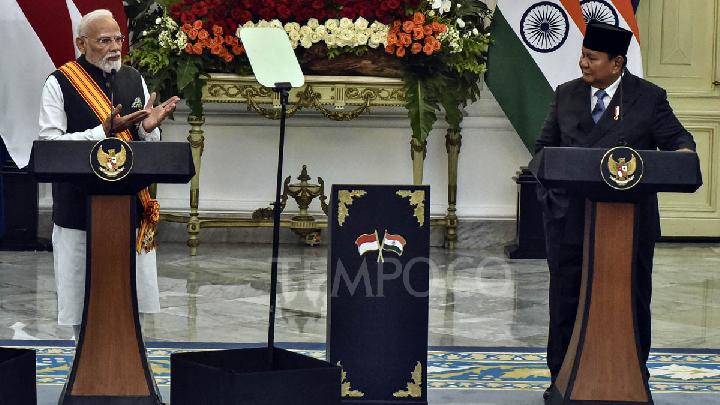
Indonesia and India Deepen Strategic Space – Indonesia and India have taken a significant step forward in their strategic partnership by announcing new agreements to strengthen collaboration in space research, technology transfer, and capacity-building initiatives. The recent bilateral meeting between Indian Prime Minister Narendra Modi and Indonesian President Prabowo Subianto at the Merdeka Palace underscored the growing importance of space cooperation as a cornerstone of their broader diplomatic and economic ties. This development comes amid global efforts to leverage space exploration for national development, with both nations aiming to align their technological aspirations and strategic interests in a rapidly evolving international arena.
A New Era of Bilateral Space Collaboration
During the meeting, Modi emphasized that Indonesia and India’s space cooperation has been a long-standing priority, but the newly agreed-upon framework marks a pivotal advancement in their relationship. The focus keyword “Indonesia and India Deepen Strategic” is central to this agreement, which seeks to institutionalize joint efforts in areas such as satellite development, Earth observation, and space science education. The collaboration is designed to address shared challenges, including the need for resilient supply chains in critical minerals and steel, which are essential for the aerospace and manufacturing sectors. By integrating their resources and expertise, both countries aim to secure a competitive edge in the global space industry.
Modi highlighted that the agreement includes provisions for the exchange of technical knowledge, joint research projects, and collaborative ventures in satellite launch technologies. This aligns with India’s ambitious space program, which has seen rapid growth in recent years, and Indonesia’s increasing investments in its National Space Agency (LAPAN). The partnership is expected to facilitate the development of advanced satellite systems for Indonesia, enhancing its capabilities in disaster monitoring, climate change research, and communication infrastructure. India’s experience in space exploration, particularly through the Indian Space Research Organisation (ISRO), will play a crucial role in this endeavor.
Strategic Implications for Regional and Global Partnerships
The strategic focus of this collaboration is not only to boost technological innovation but also to foster economic stability and industrial growth in both nations. Modi pointed out that the agreement will support the production of critical minerals and steel, which are foundational for the development of satellites and spacecraft. This is particularly significant given the global shift towards self-reliance in supply chains, as seen in the U.S. and China’s efforts to secure raw materials for high-tech industries. Indonesia’s abundant natural resources, combined with India’s manufacturing prowess, position the two countries to lead in regional supply chain initiatives.
Indonesia’s commitment to this partnership reflects its broader strategy to diversify its international alliances and reduce dependency on foreign technologies. The focus keyword “Indonesia and India Deepen Strategic” is echoed in the country’s Vision 2045, which envisions Indonesia as a regional leader in science, technology, and innovation. India, on the other hand, seeks to expand its influence in Southeast Asia through this alliance, reinforcing its role as a key player in the Indo-Pacific region. The collaboration also aims to create new opportunities for joint ventures in space-based services, such as satellite navigation and remote sensing, which can benefit both economies.
Additionally, the agreement includes a commitment to developing a joint space training program, which will enable Indonesian and Indian professionals to work together on cutting-edge technologies. This initiative is expected to enhance skills development in the space sector, addressing a critical need for talent in emerging economies. The strategic alignment between the two nations is further strengthened by their shared goals of promoting sustainable development and leveraging space technology for national progress. As Modi stated, “This partnership will ensure that both countries are at the forefront of innovation and capable of meeting the challenges of the 21st century.”
Indonesia and India Deepen Strategic cooperation is also set to play a role in addressing climate change and environmental monitoring. By combining their satellite capabilities, the two nations can provide more accurate data for tracking deforestation, sea-level rise, and weather patterns. This will be particularly valuable for Indonesia, which faces increasing challenges from natural disasters and climate-related issues. The agreement also includes plans for joint space missions that could explore the potential of space-based technologies for agriculture, urban planning, and disaster response, further solidifying the strategic importance of this collaboration.
Furthermore, the partnership is expected to stimulate economic growth by creating new industries and employment opportunities in the space sector. As both countries invest in space infrastructure, they are likely to attract foreign investment and foster innovation in related fields. The strategic focus of this agreement ensures that the benefits of space cooperation extend beyond technological advancements to include tangible economic and social outcomes. With continued efforts, Indonesia and India could become a model for how developing nations can collaborate to achieve shared objectives in the global space race.
Read: Indian PM Modi Hails Cultural Ties with Indonesia Click here to get the latest news updates from Tempo on Google News